Bronchoscopy
Bronchoscopy
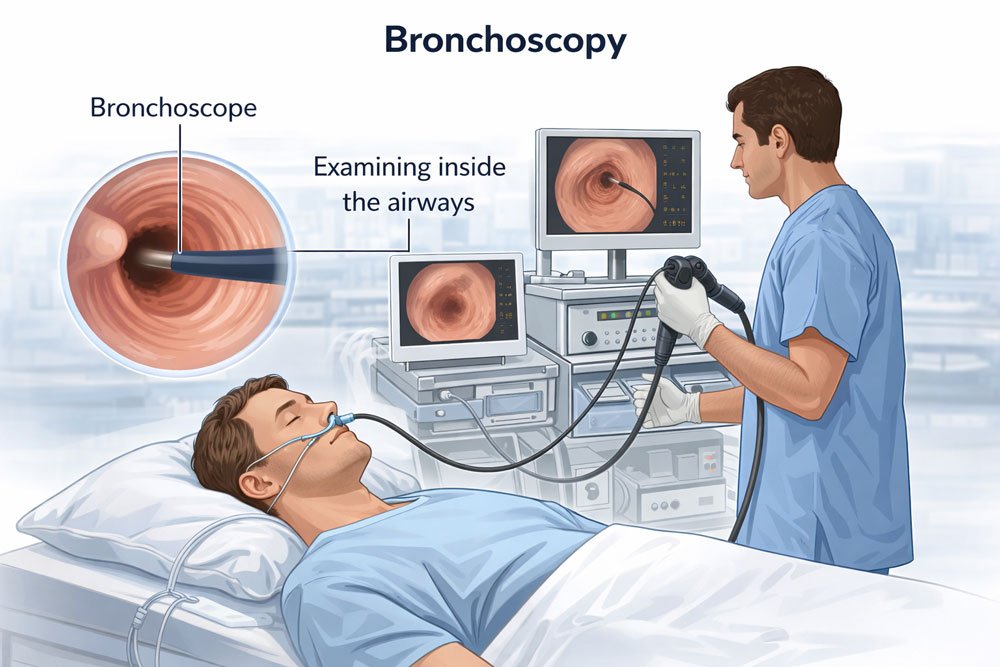
Bronchoscopy is a minimally invasive medical procedure used to examine the airways and lungs. It involves inserting a thin, flexible tube called a bronchoscope through the nose or mouth into the respiratory tract. Equipped with a camera and light, the bronchoscope allows doctors to view the internal structures of the lungs in real time. This procedure is commonly used to diagnose conditions such as infections, tumors, or blockages, and can also be used to collect tissue samples (biopsy) for further analysis. Bronchoscopy is generally safe, quick, and highly effective in providing accurate diagnosis and guiding appropriate treatment.
Types of Bronchoscopy:
- Flexible Bronchoscopy: Most common, uses a flexible tube for diagnosis
- Rigid Bronchoscopy: Used in special cases for removing blockages or controlling bleeding
Why is Bronchoscopy Performed?
Bronchoscopy is used for both diagnostic and therapeutic purposes, including:
- Investigating persistent cough or unexplained breathing issues
- Detecting lung infections or inflammation
- Diagnosing lung cancer or tumors
- Evaluating abnormal findings on X-ray or CT scan
- Identifying airway blockages or foreign bodies
- Collecting tissue samples (biopsy)