Endobronchial Ultrasound (EBUS)
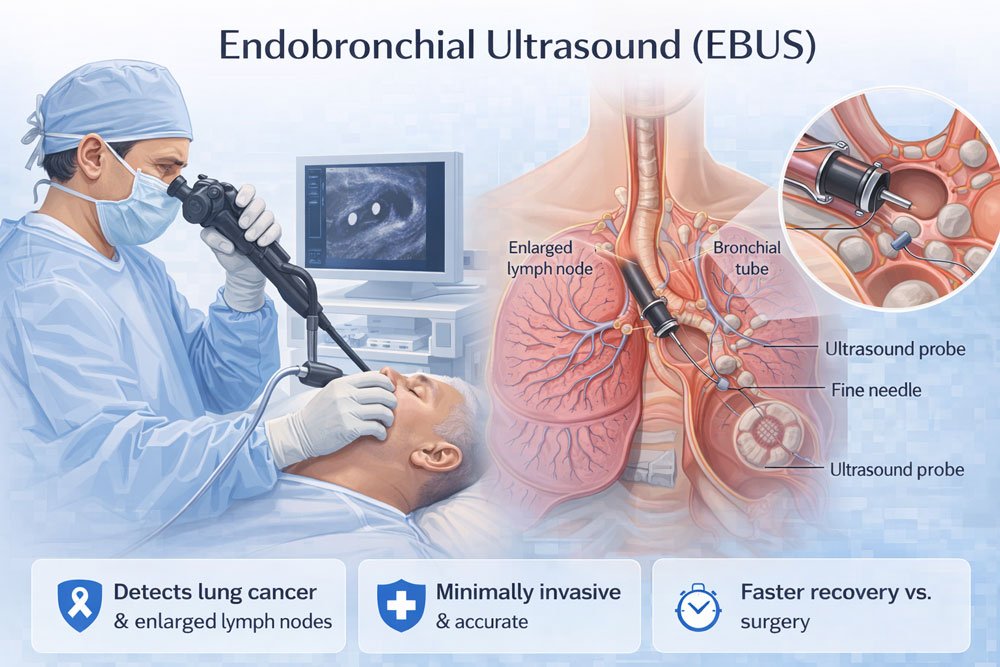
Endobronchial Ultrasound (EBUS) is an advanced, minimally invasive procedure used to diagnose and evaluate conditions within the lungs and surrounding lymph nodes. It combines bronchoscopy with real-time ultrasound imaging, allowing doctors to visualize structures beyond the airway walls with high accuracy.
EBUS is especially valuable for detecting lung cancer, infections, and other abnormalities without the need for major surgery.
Types of EBUS
- EBUS-TBNA (Transbronchial Needle Aspiration): Used to collect tissue samples from lymph nodes
- Radial EBUS: Used to locate and evaluate lung lesions